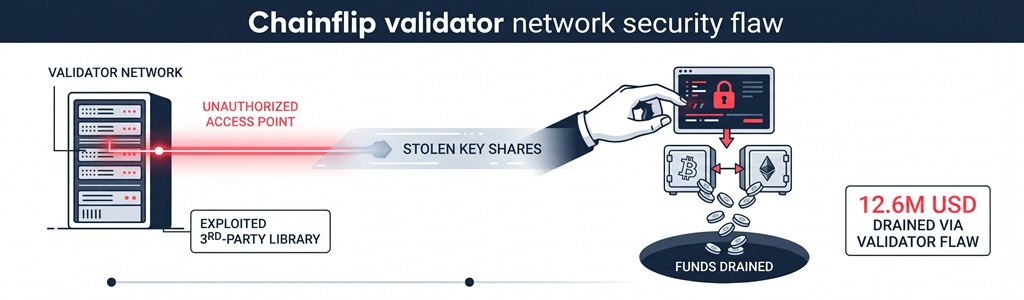
Three transactions nearly emptied Chainflip’s Bitcoin and Ethereum vaults on November 21, 2026. All three carried valid vault signatures, but the cross-chain swap protocol had requested none of them, Chainflip Labs said in its November 23 incident report. The withdrawn assets were worth approximately $12.6 million at prices on the morning of the theft.
As of November 24, 2026, at 07:55 UTC+8, swaps, deposits and withdrawals remained paused. All active validators had installed a software fix, but Chainflip Labs had not yet published individual loss amounts or detailed how it would compensate affected users.
The three withdrawals and the response
- 06:41 UTC, November 21 — first Bitcoin withdrawal. A transfer moved 122.86 BTC out of the vault. An internal monitor flagged it eight minutes later. Chainflip Labs said the monitor was still in testing and had produced false alarms, so its warnings did not trigger automatic escalation.
- 07:10 UTC — Ethereum withdrawal. A single transaction removed 520.22 ETH, 3,249,631 USDC and 758,141 USDT. Within minutes, the attacker swapped the stablecoins for ETH and sent 2,909 ETH to Tornado Cash, according to the report.
- 11:24 UTC — second Bitcoin withdrawal. The attacker withdrew another 10.48 BTC, bringing the reported Bitcoin loss to 133.34 BTC. By then, a team member had alerted the project’s Discord at 07:41, the first protocol responder had come online at 07:52, governance had forced a key rotation at 08:14, and the protocol had suspended operations at 08:31. Chainflip Labs said the old key could still spend the remaining bitcoin despite the rotation.
At 16:18 UTC on November 23, Chainflip Labs reported that the bitcoin remained at two addresses: bc1qm777twlzmelyutungyfw65ykn2l5kn68e6v4g6 held 122.86136932 BTC, and bc1qp5r8aemhg8pxytlhcn43k8ptc6l6y03vxud5pr held 10.48283731 BTC. The team said it would continue tracking the Ethereum funds if they left Tornado Cash.
Why valid signatures did not establish authorization
Chainflip Labs said the attacker obtained signing-key shares from validator machines and used them to sign transactions outside the protocol’s normal coordination process. The team attributed the compromise to a memory-safety flaw in a third-party networking library used by its validator software. It did not name the library and said parts of its account were still under investigation.
The report identified a validator account, cFMH2YX722cFGNemZ5tbZnq7XvYZ3xWyTRdLrW1cLgyrJtEKe, registered with the minimum deposit at 11:00 UTC on November 20, 79 seconds after it was funded with 20,500 FLIP. The account never became an active validator. Registered candidates nevertheless needed to communicate with existing validators before joining the active set. The account was removed from the validator peer list at 12:37 UTC on November 21.
Chainflip Labs released patched software that afternoon and completed a second key rotation on November 22. By 11:31 UTC on November 23, it had confirmed that every active validator was running the fix.
Balances, losses and recovery plans
Chainflip Labs said liquidity providers and FLIP holders bore most of the impact. It had begun returning providers’ free balances on unaffected chains to refund addresses on Solana, Arbitrum, Tron, BNB Chain and Polkadot Assethub. Users with open lending, strategy or range-order positions could still have assets on those chains in their Chainflip accounts. These balance returns were separate from the proposed recapitalization of the most active liquidity providers through funding and incentives.
FLIP fell 29% after the first reports of a possible exploit, when the estimated Ethereum loss was $4.86 million and the Bitcoin withdrawals had not yet been confirmed. This was Chainflip’s second exploit in less than two months: in September 2026, the network paused after an attacker drained 736,442 USDT through its Tron integration.
Chainflip Labs said it was working with law enforcement and blockchain investigation firm ZeroShadow, and had offered the attacker a bounty for returning the assets. It said metadata left by the attacker might help authorities identify them. The team planned to add safeguards and resume service, with compensation details and a fuller recovery plan to follow in a subsequent update.