
A Bitcoin transaction can be verified without asking a bank for access to its records. The same public ledger that enables that verification also exposes transaction inputs, outputs and amounts. In a discussion published on November 16, 2026, the original article examines how privacy systems try to change what observers can see without abandoning verification.
Start with the transaction record
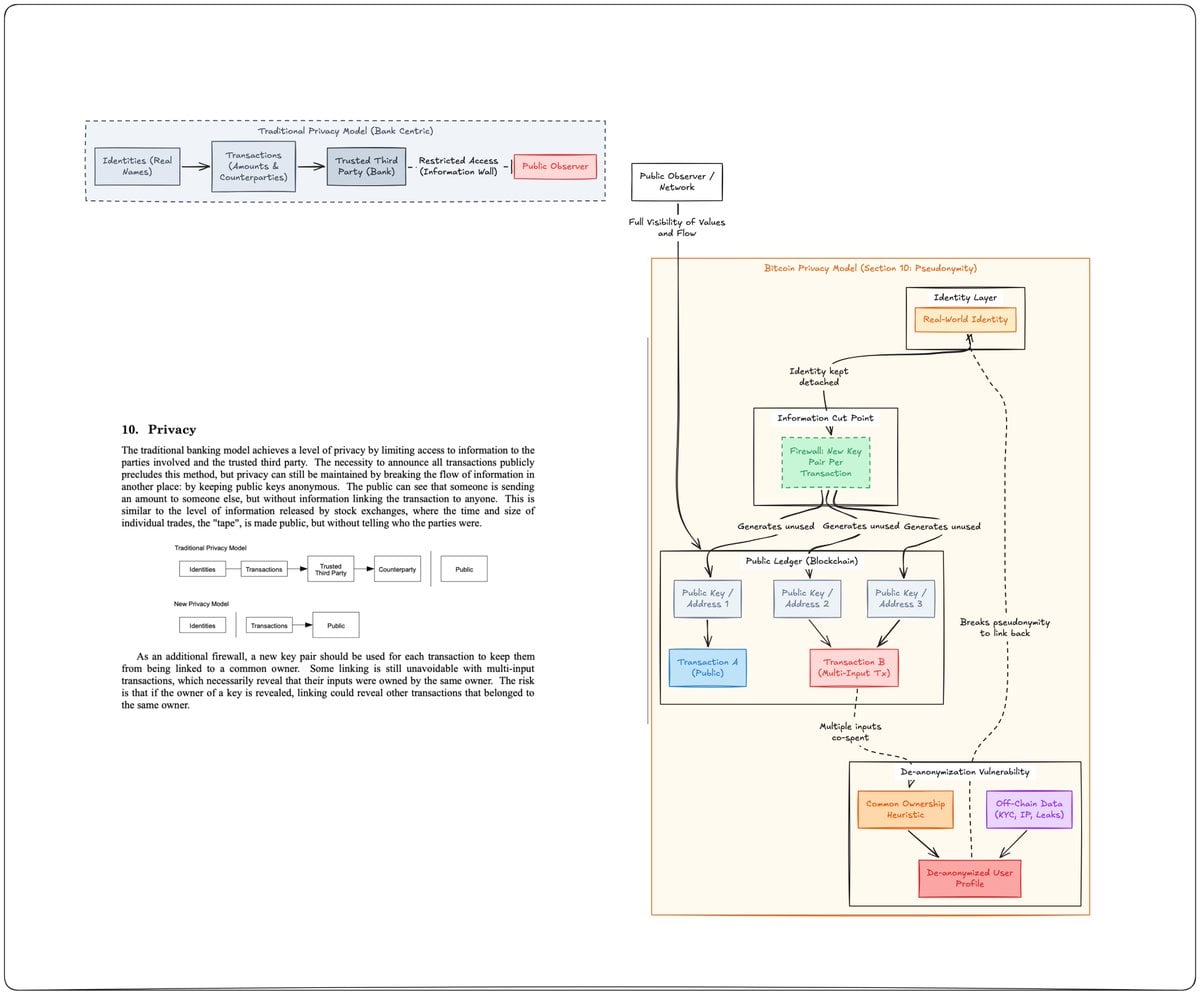
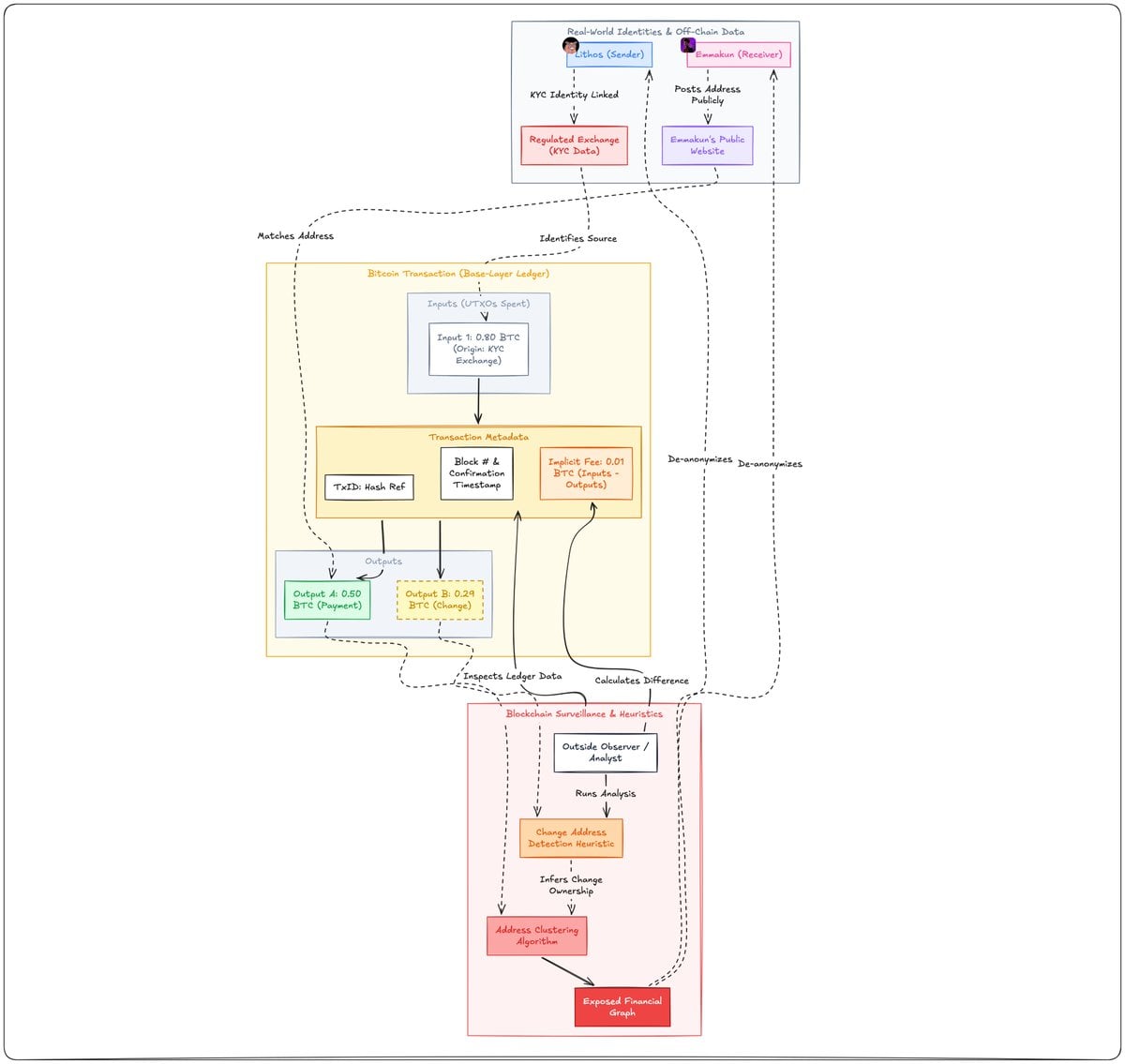
A Bitcoin transaction spends existing unspent transaction outputs, or UTXOs, and creates new outputs with specified amounts. An observer can inspect those records, calculate the fee from the difference between total inputs and outputs, and identify the block height and timestamp associated with confirmation. The ledger does not directly record the participants’ names.
That distinction matters. If an address becomes associated with a person through information outside the chain, an analyst may be able to investigate related activity. But an address is not, by itself, a person, and a transaction graph is not a definitive account of who paid whom. One output may be change returned to the sender; identifying it often depends on fallible heuristics.
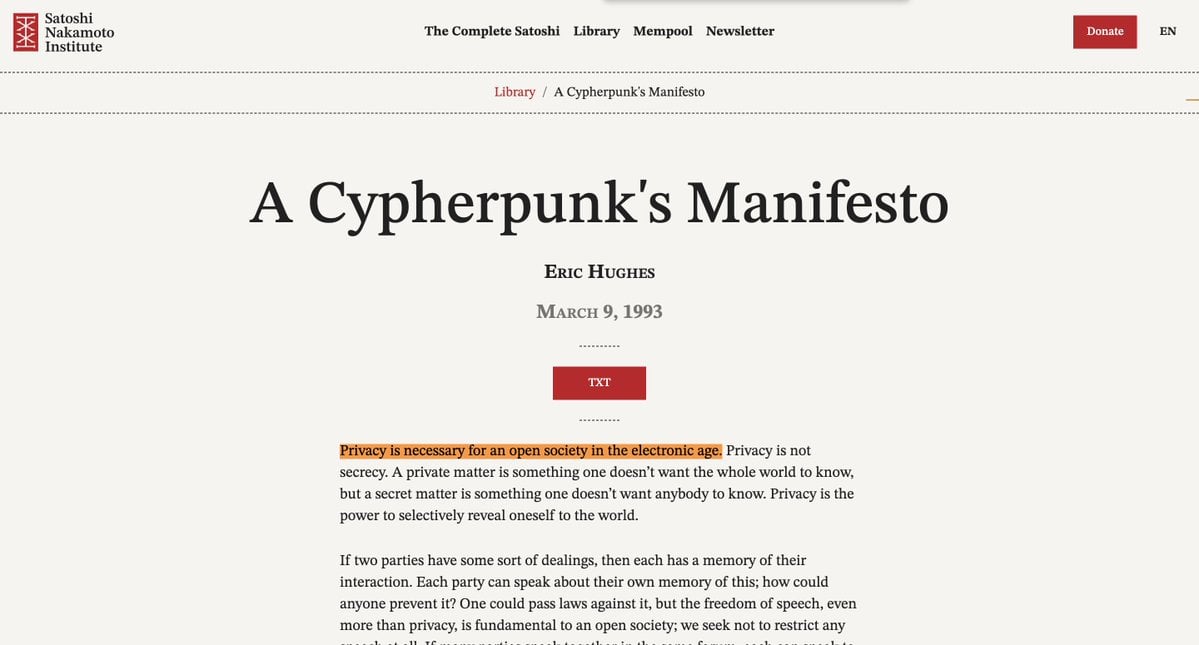
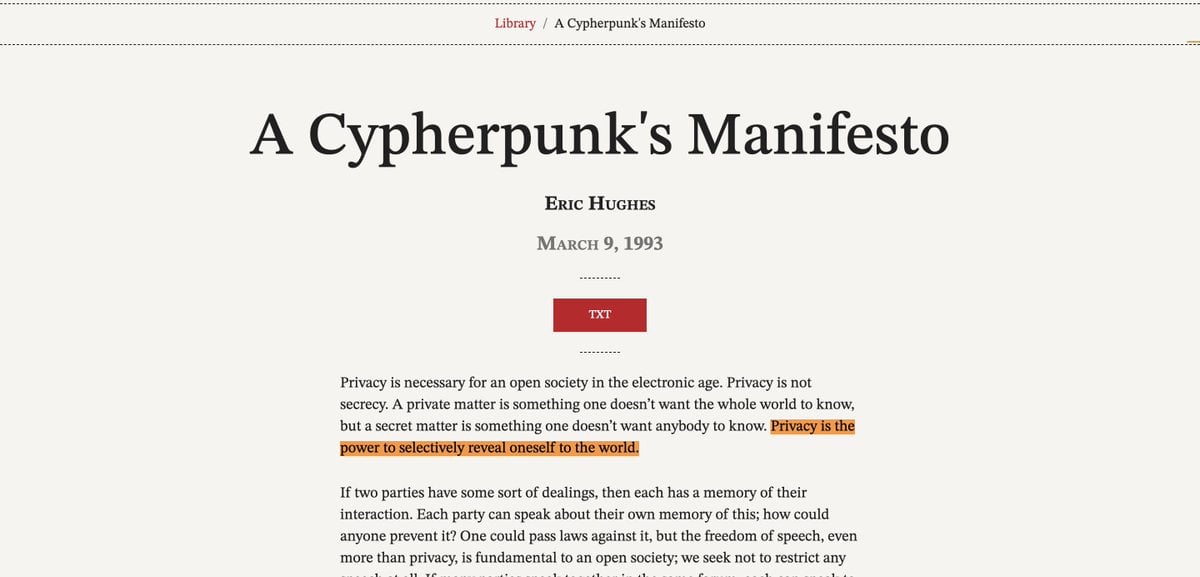
Section 10 of Satoshi Nakamoto’s 2008 Bitcoin white paper acknowledged the privacy trade-off. It proposed keeping public keys disconnected from real-world identities and using a new key pair for each transaction. Nakamoto also noted that spending multiple inputs together can link them to a common owner. Bitcoin’s native model is therefore pseudonymity, not confidential transactions.
How the design question developed
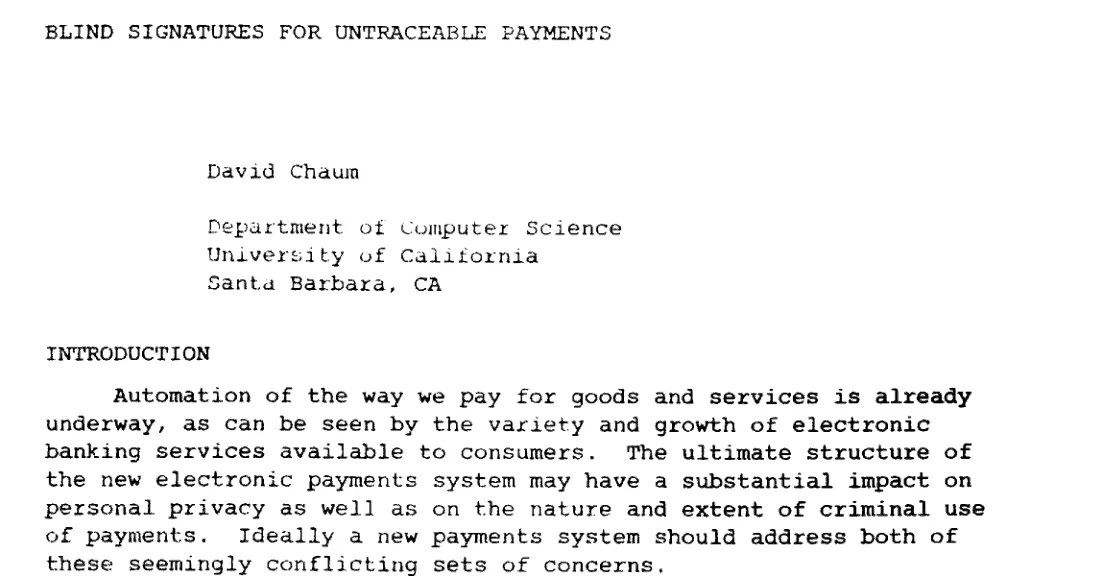
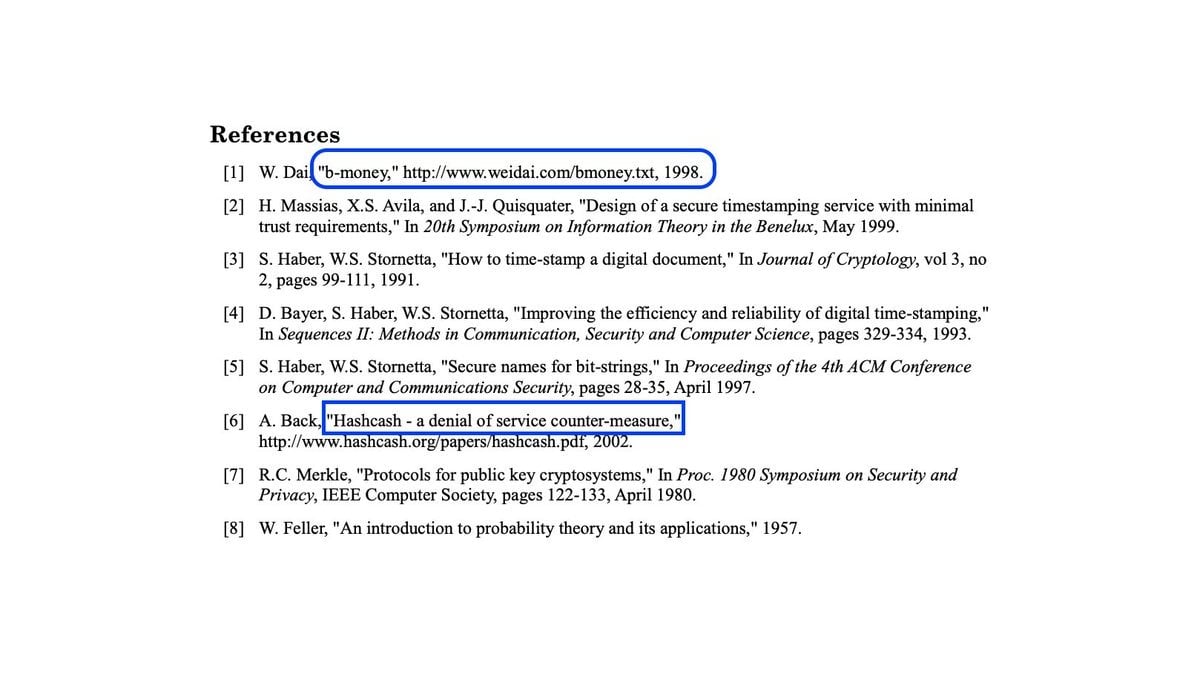
Privacy-preserving digital payments predate Bitcoin. David Chaum’s 1982 work on blind signatures examined how to prevent an issuer from linking a payment credential to its eventual use, though the model still relied on a central issuer. Later proposals addressed other pieces of digital cash: Adam Back’s Hashcash described proof of work; Wei Dai proposed b-money; Nick Szabo developed bit gold; and Hal Finney explored reusable proof of work. Bitcoin’s white paper cited Hashcash and b-money.
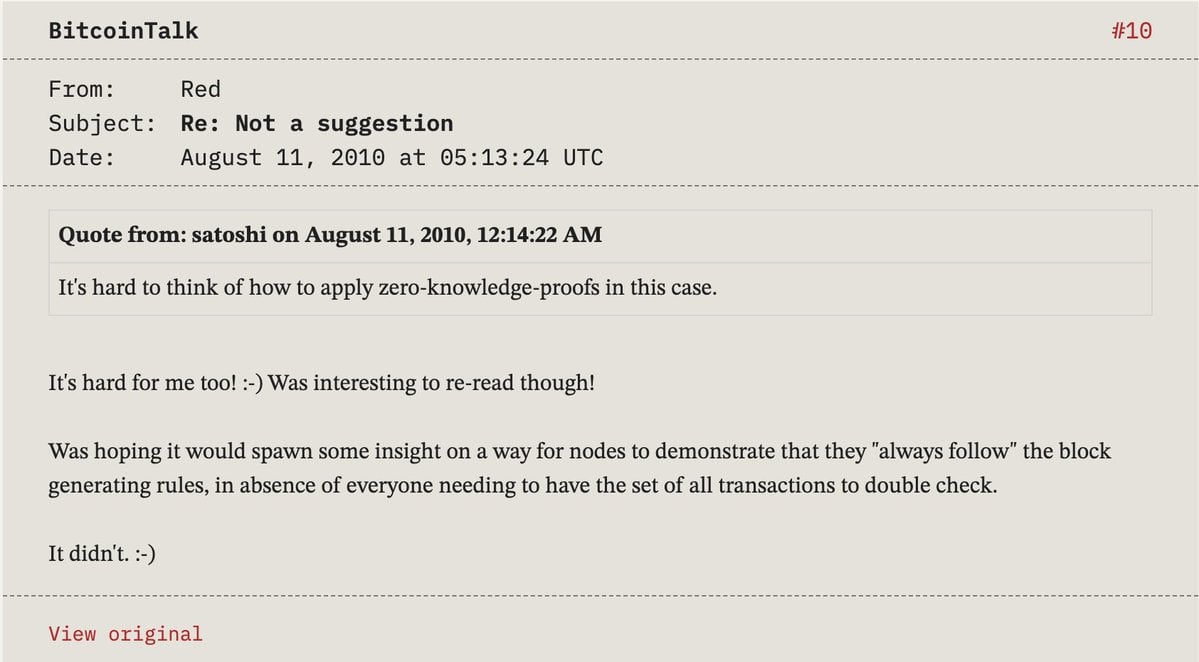
In a 2010 BitcoinTalk discussion about validating against double spending without retaining full transaction history, Nakamoto said it was difficult to see how zero-knowledge proofs would apply in that setting. That was a question about proving that a coin had not previously been spent with less historical information—not a general dismissal of proofs for concealing payment details.
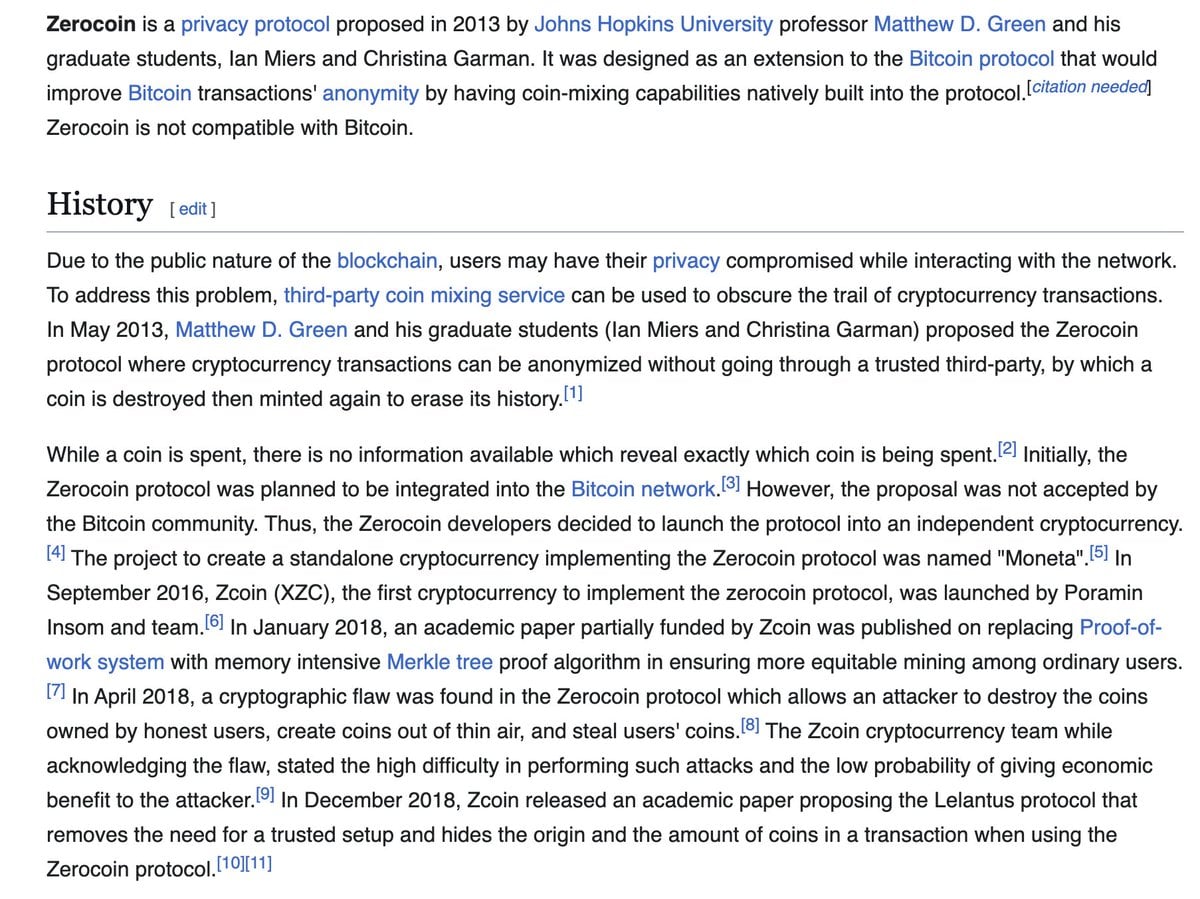
Research subsequently pursued that different problem. The 2013 Zerocoin paper sought to break links to a payment’s source but did not hide every payment field. The 2014 Zerocash work used zk-SNARKs to explore validation while concealing sender, recipient and amount.
Compare what remains observable
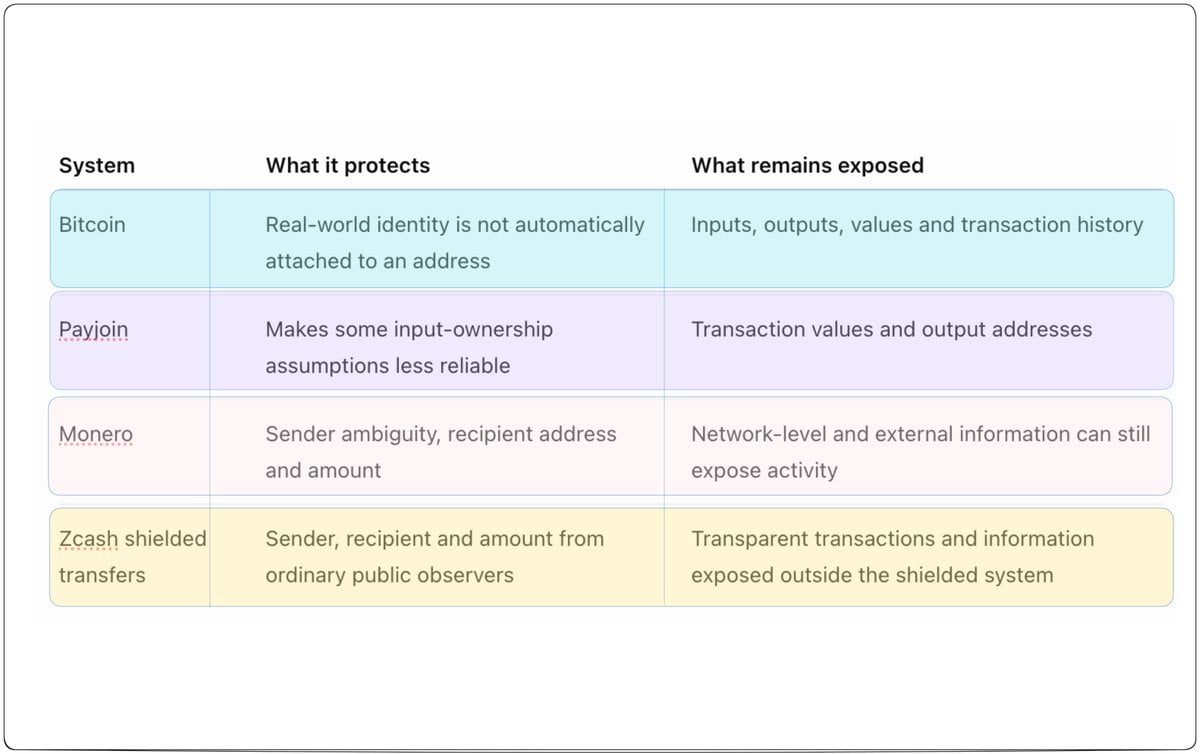
Privacy systems protect different fields and introduce different assumptions:
- Bitcoin Payjoin, specified in BIP 78, lets a recipient contribute an input to a payment. That can invalidate the common analytical assumption that every input in a transaction belongs to one owner. It does not hide the transaction’s amounts.
- Monero uses ring signatures, stealth addresses and RingCT to obscure spending, recipients and amounts on-chain. The source notes that sender privacy depends in part on the ring and on information available to an observer. Its use of Dandelion++ does not eliminate every network-level leak.
- Zcash supports shielded transactions that conceal core payment details while allowing proof verification. It also supports transparent addresses, whose interactions remain visible. Privacy depends on how shielded features are used and on observable movement between transparent and shielded funds. Viewing keys provide a way to disclose information to a chosen party without handing over spending authority.
These are descriptions of protocol designs, not claims that every user or transaction receives identical protection. On-chain concealment does not by itself hide an IP address, secure a compromised device or prevent an exchange from associating an account with its customer.
Contracts, pools and wallet queries
The original article also surveys privacy beyond simple transfers. Aztec describes an Ethereum Layer 2 design combining private functions executed locally, with proofs submitted to the network, and public functions using shared state. A remote node may still learn what state a client requests. Oasis Sapphire instead uses trusted execution environments for confidential contract execution; that approach adds trust in hardware and its security implementation, rather than relying on the same assumptions as a client-side proof system.
For pooled funds, the source describes Umbra V2 as focused on confidential transfers inside a shielded pool, while deposits and withdrawals may leave observable amounts and timing. Privacy Pools uses association-set screening and zero-knowledge proofs so that a withdrawal can be shown to belong to an accepted set without identifying the particular deposit. Those properties should be evaluated as design claims, not as proof that all fund flows are untraceable or that screening is infallible.
Even before a transaction is sent, a wallet may reveal an address of interest when it asks a remote RPC service for a balance or history. Kohaku, described as a privacy-focused wallet and SDK initiative, aims to address such query leakage, including through private information retrieval. That is a separate privacy boundary from the ledger itself.
The useful question for any of these systems is specific: Which fields can a public observer read, what can a service provider infer, and whom must the user trust? Concealing a payment amount, weakening an address-linking heuristic and hiding a wallet query solve different problems. None alone makes the entire path from device to ledger private.