
Historical report: Deep Tide TechFlow published this Castle Labs weekly roundup on November 11, 2026, at 09:57 (UTC+8). The figures and product plans below reflect what it reported then, not current conditions.
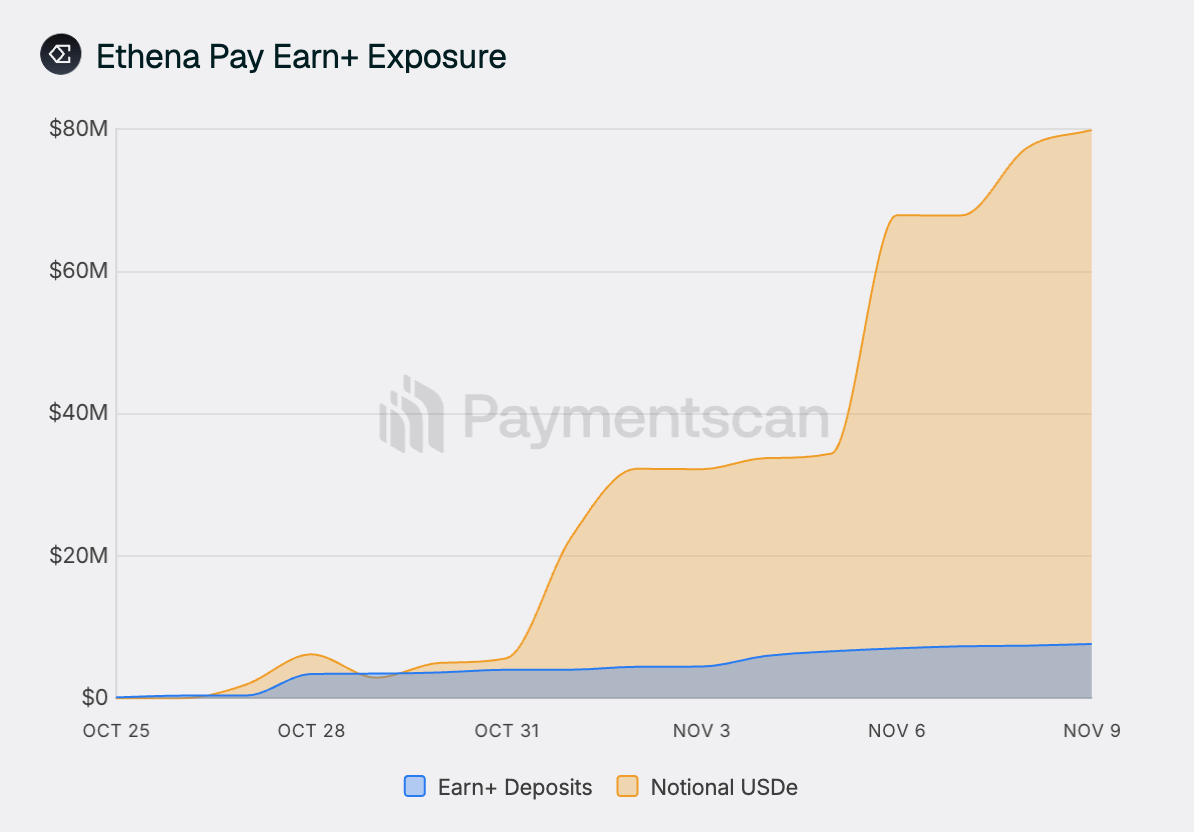
Ethena Pay: deposits and USDe demand are different measures
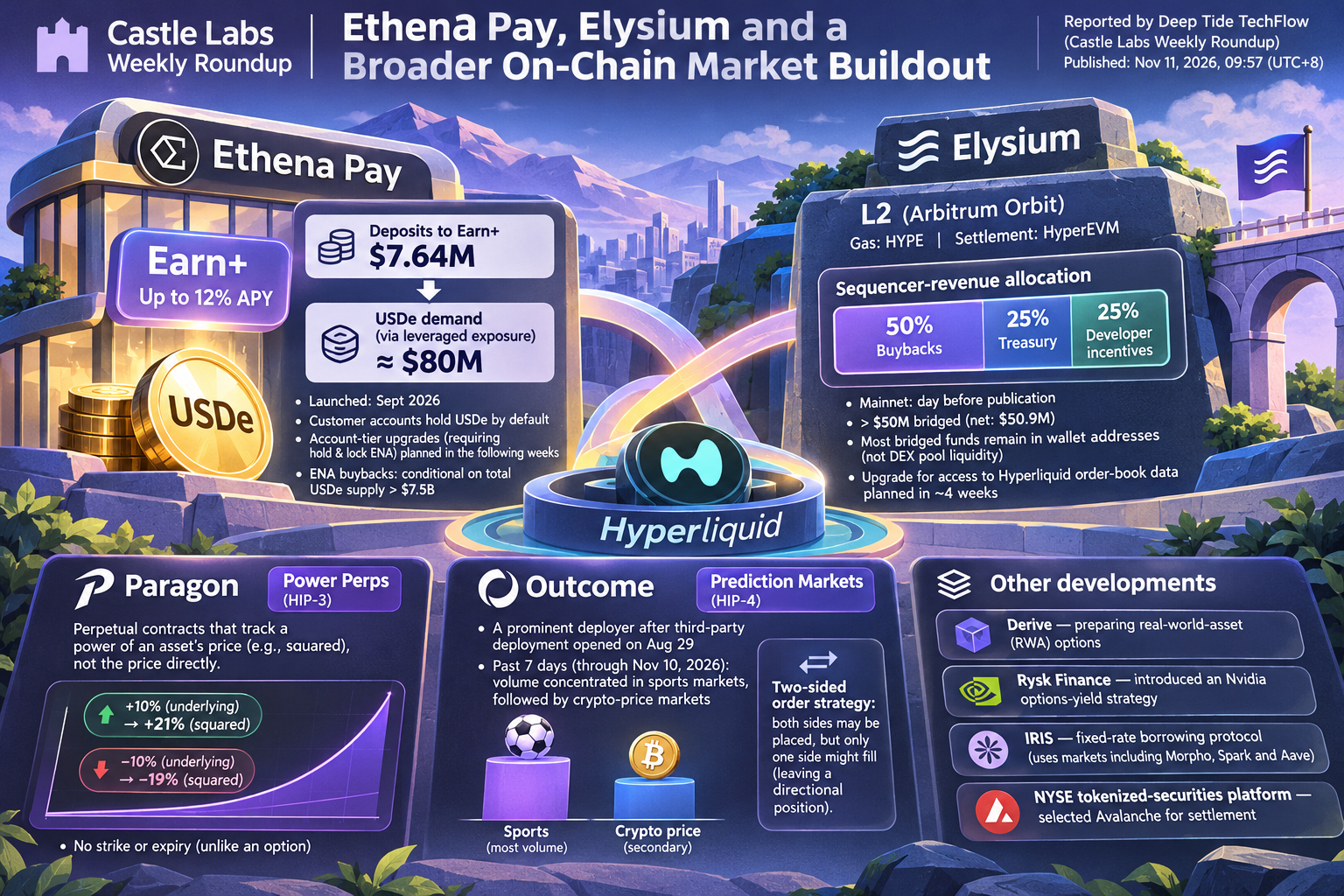
The roundup reported $7.64 million in deposits to Earn+, a feature added to Ethena Pay in late October 2026, and said those deposits generated approximately $80 million in demand for USDe through leveraged exposure. The two figures measure different things: customer deposits and the larger USDe exposure the product was reported to create. They should not be read as equivalent balances.

Ethena Pay launched in September 2026, according to the article. Earn+ advertised yields of up to 12% APY. In an interview for the roundup, Ethena Pay go-to-market lead Lito said customer accounts hold USDe by default and that control of the customer-facing product helps Ethena distribute new features. Lito also said account-tier upgrades requiring users to hold and lock ENA would be announced in the following weeks; that was a plan, not a feature already in effect. The article described ENA buybacks as conditional on total USDe supply exceeding $7.5 billion.
Elysium: bridged funds are not pool liquidity
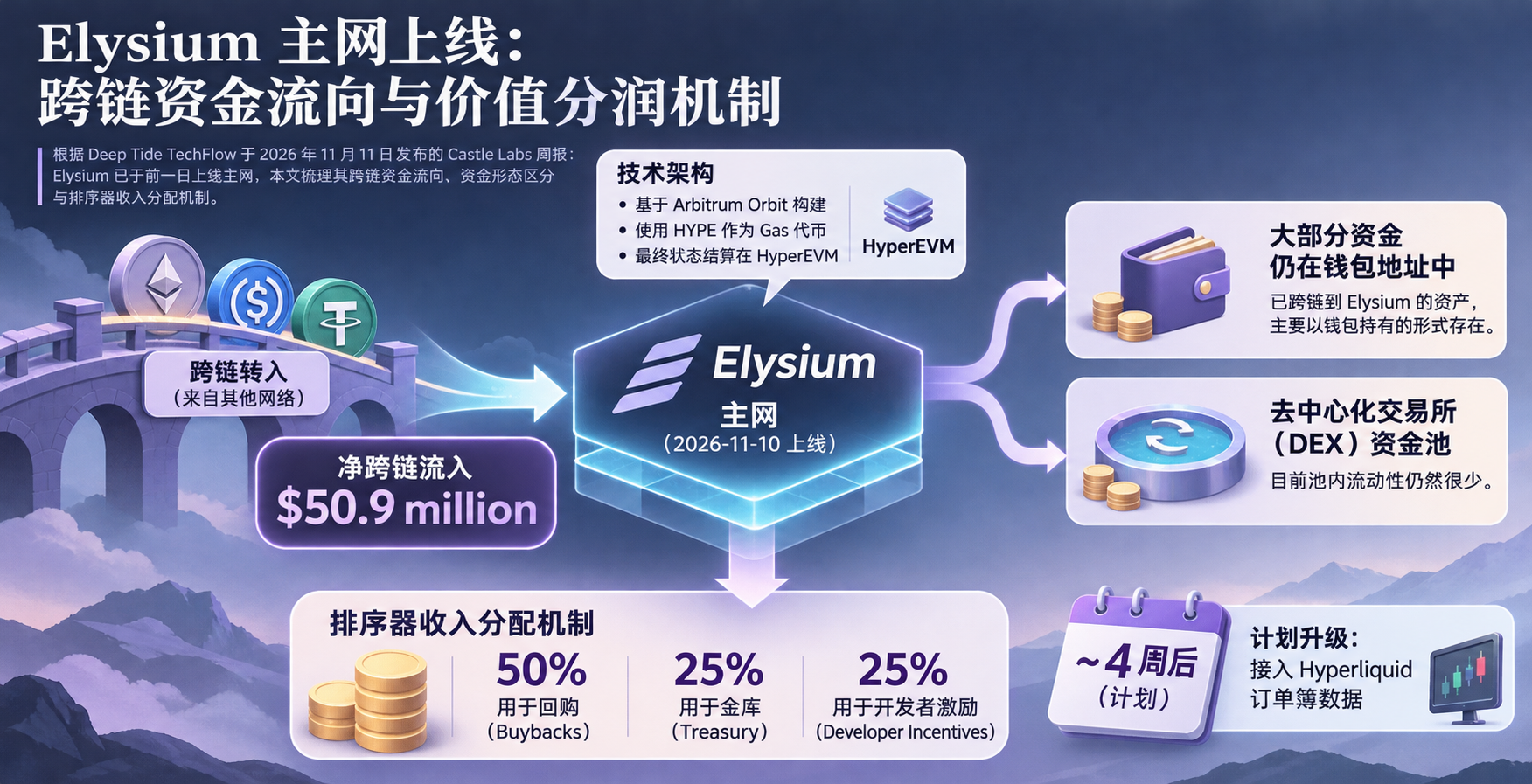
The roundup said Elysium had launched its mainnet the day before publication. It described the network as built with Arbitrum Orbit, using HYPE for gas and settling final state on HyperEVM. Its stated sequencer-revenue allocation was 50% for buybacks, 25% for a treasury and 25% for developer incentives.
The article reported more than $50 million bridged to Elysium after launch, including a chart showing $50.9 million in net bridging. It said most of those funds remained in wallet addresses rather than decentralized-exchange pools. That distinction matters when interpreting the figure: a bridge inflow records assets arriving on the network, not liquidity available to traders. The roundup said an upgrade enabling access to Hyperliquid order-book data was planned for roughly four weeks later; it did not report that capability as live.
Markets and other infrastructure claims
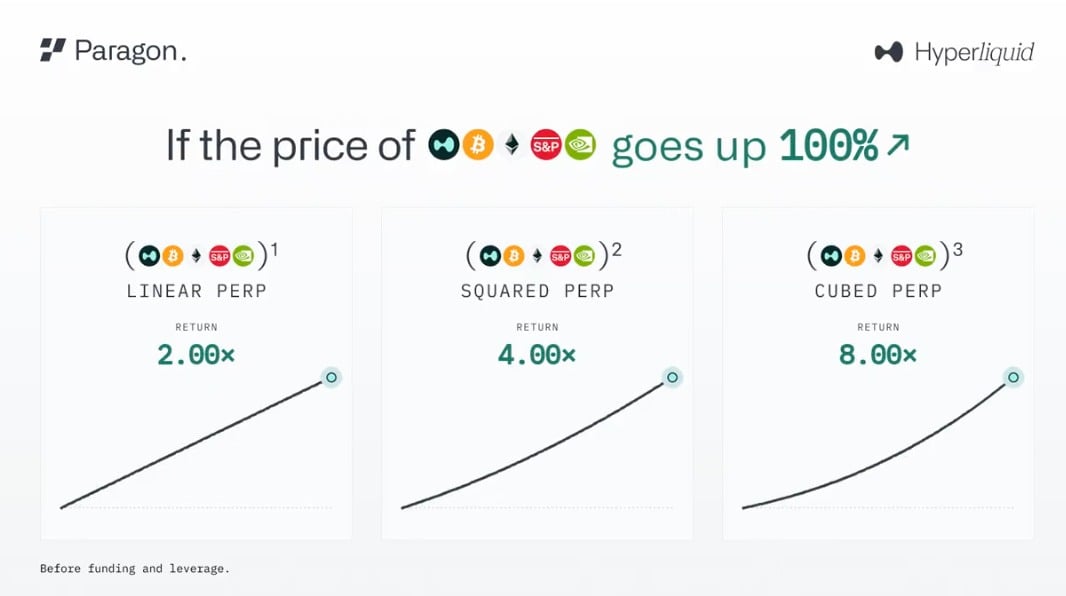
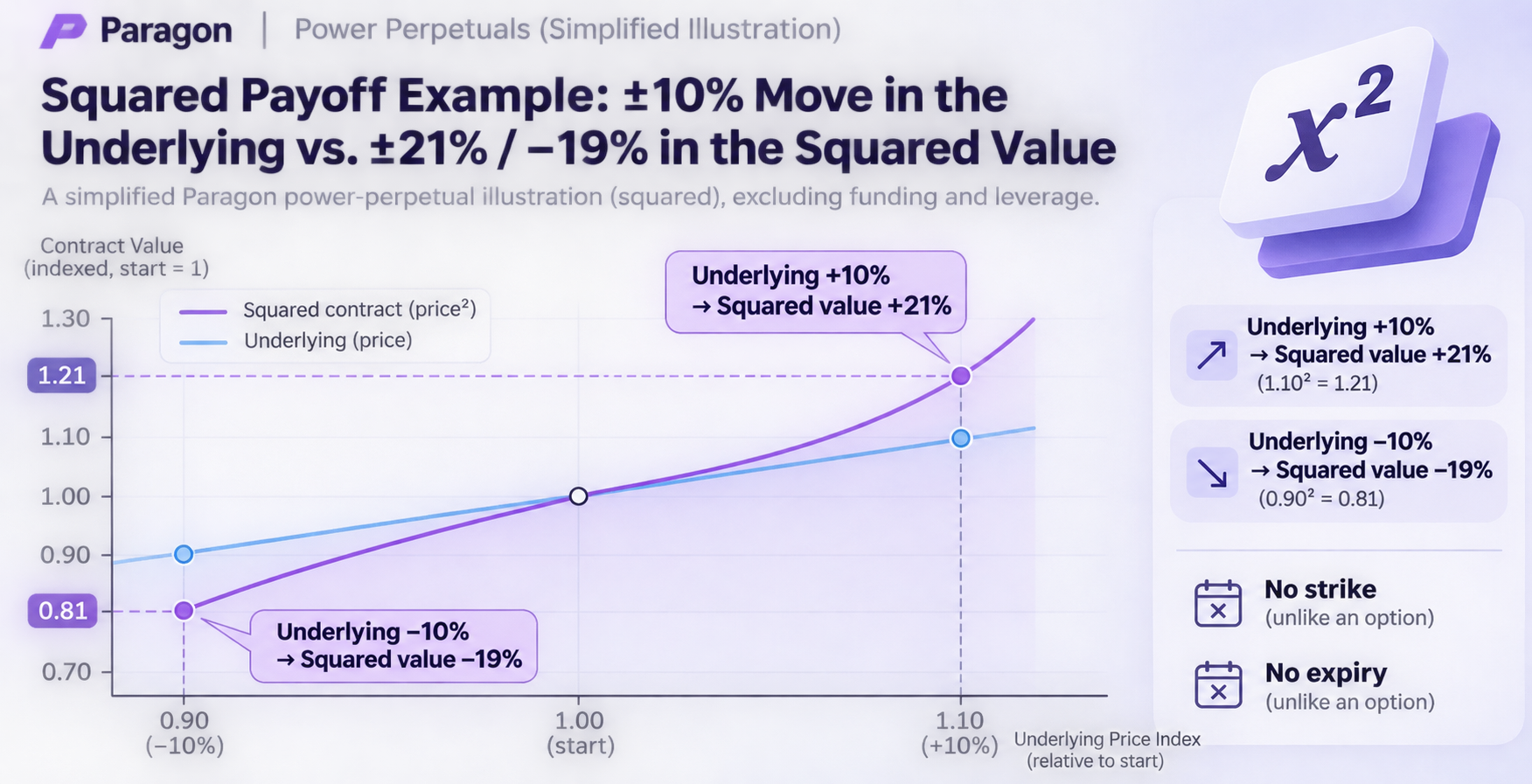
Paragon, identified as a Hyperliquid HIP-3 deployer, had introduced power perpetuals: contracts tracking a power of an asset’s price rather than its price directly. The article illustrated a squared contract with a 10% underlying-price rise corresponding to a 21% increase in the squared value, or a 10% fall corresponding to a 19% decrease, before funding and leverage. Unlike an option, the product as described has no strike or expiry.
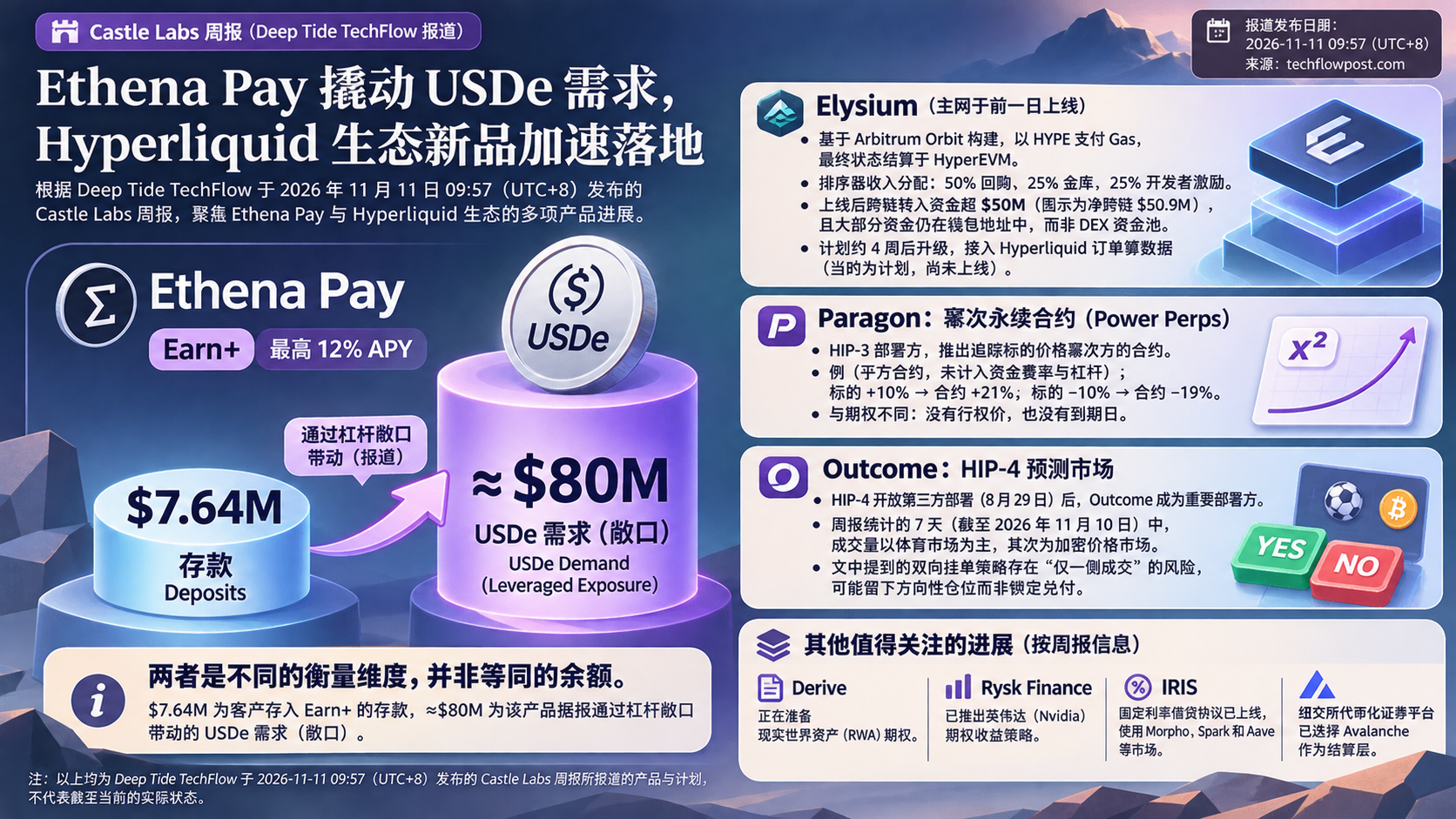
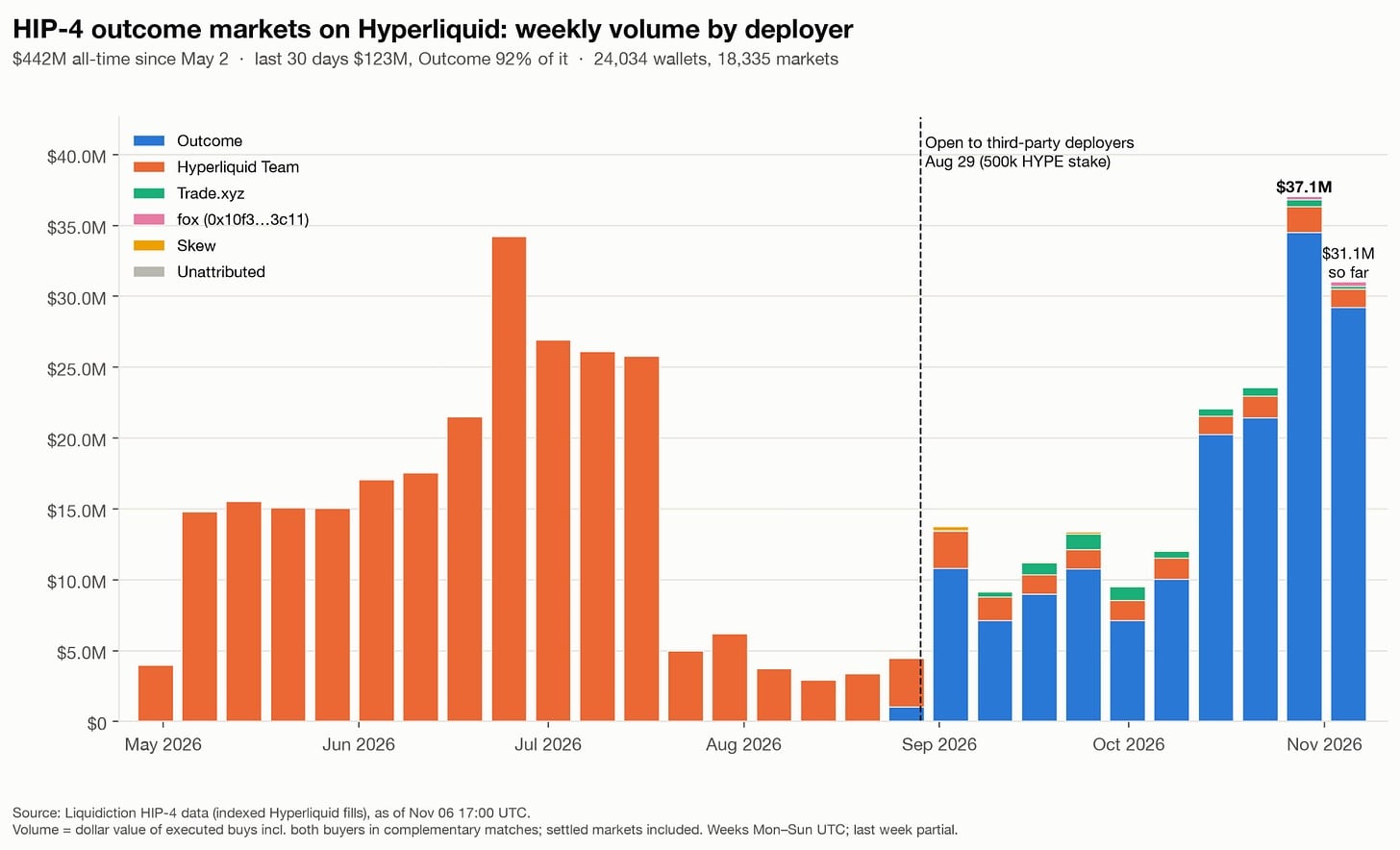
For HIP-4 prediction markets, the roundup identified Outcome as a prominent deployer following the opening of third-party deployment on August 29. Its chart of listed markets covered the seven days through November 10, 2026, and showed volume concentrated in sports markets, followed by crypto-price markets. The article also described a two-sided order strategy, but acknowledged that only one side might fill—leaving a directional position rather than a locked payout.
Other items were reported at different stages: Derive was preparing real-world-asset options; Rysk Finance had introduced an Nvidia options-yield strategy; and fixed-rate borrowing protocol IRIS had launched, using markets including Morpho, Spark and Aave. The roundup also reported that a New York Stock Exchange tokenized-securities platform had selected Avalanche for settlement. These are the source’s product and partnership claims, not conclusions established by the deposit, bridge or trading figures above.
Source: techflowpost.com (originally published 2026-11-11 09:57 UTC+8)