
Originally reported on November 13, 2026, at 14:05 (UTC+8). This article describes the EEZ design and examples as presented by 0xJaehaerys of 白话区块链; it does not independently verify the reported demonstrations or measurements.
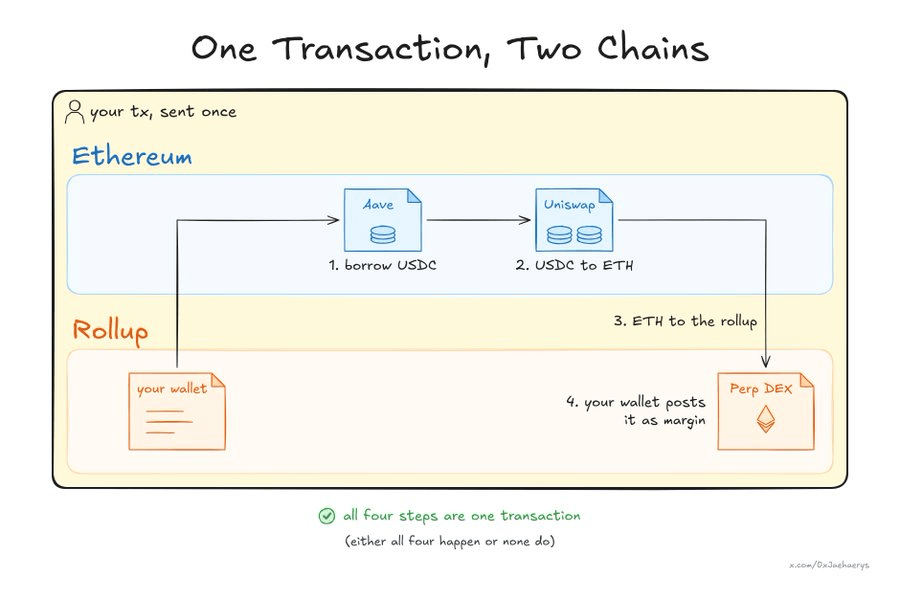
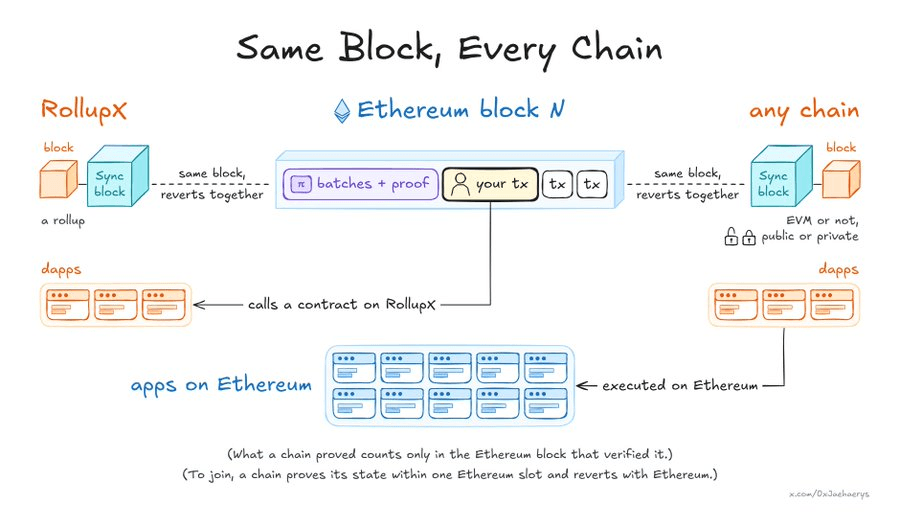
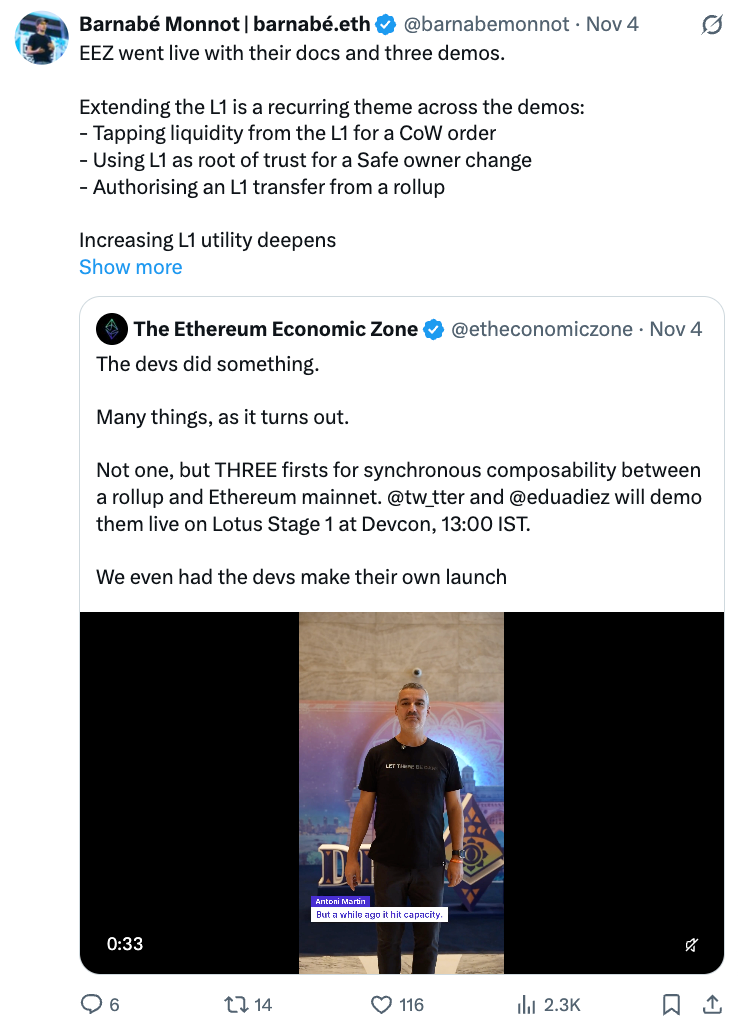
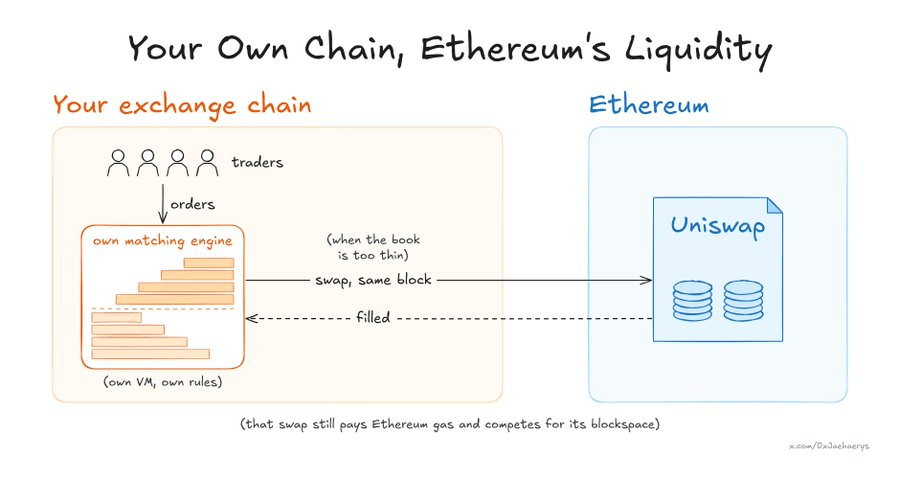
A transaction on one chain cannot ordinarily read another chain’s changing state and receive a final answer in the same transaction. The Ethereum Economic Zone (EEZ) proposes a way for connected rollups to use Ethereum contracts—and one another’s contracts—within the same Ethereum block. It is not a new chain or execution stack. Each participating chain keeps its own virtual machine, transaction ordering, admission rules and choice of proofs.
What a cross-chain call would record
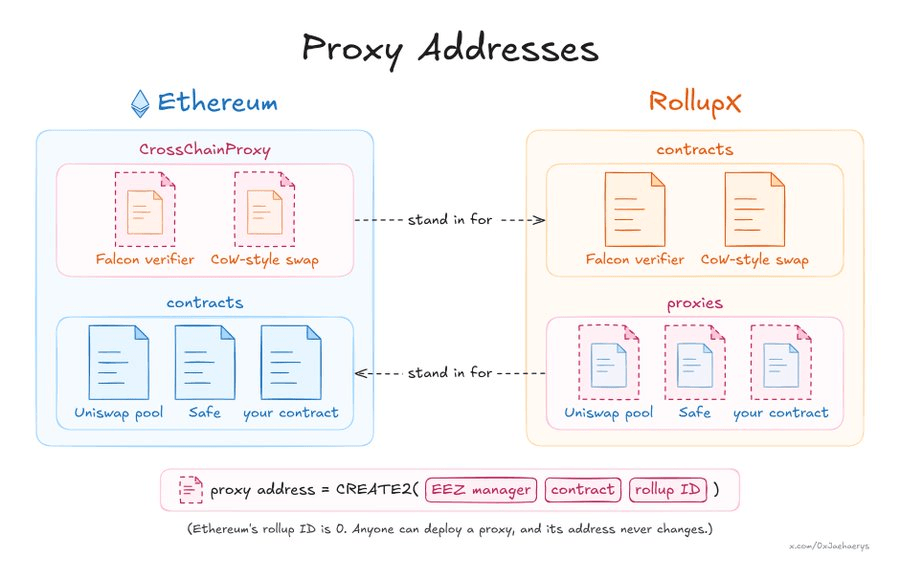
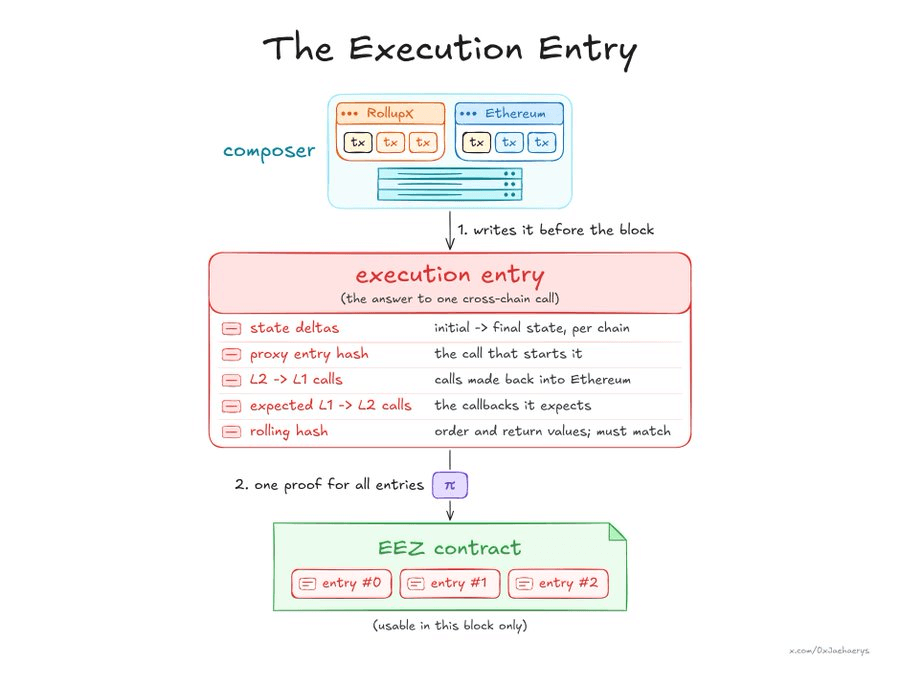
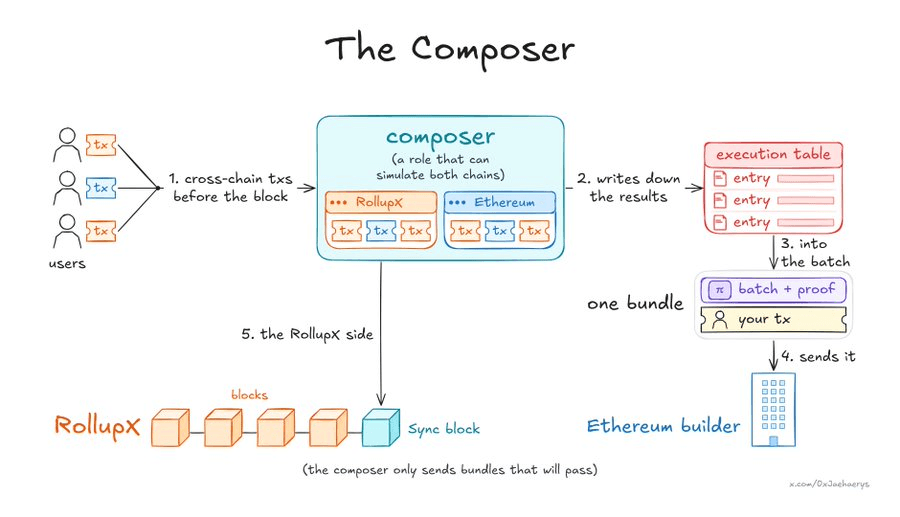
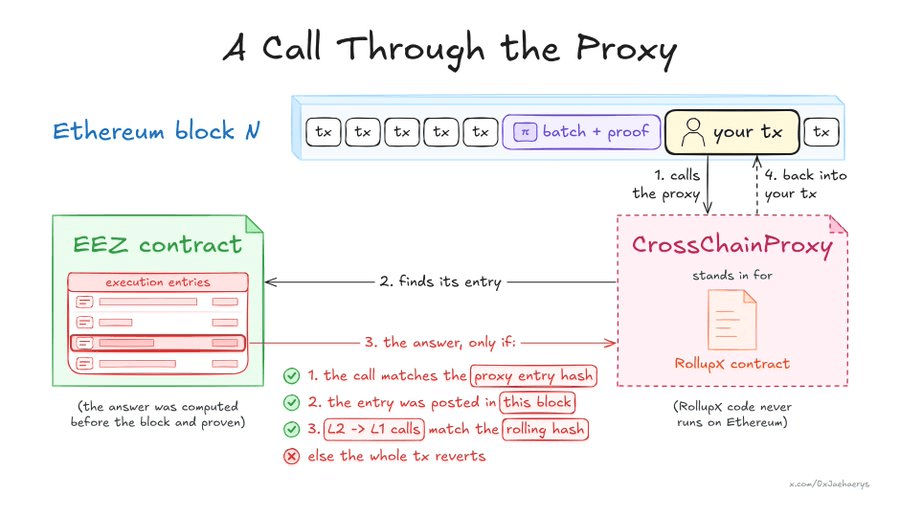
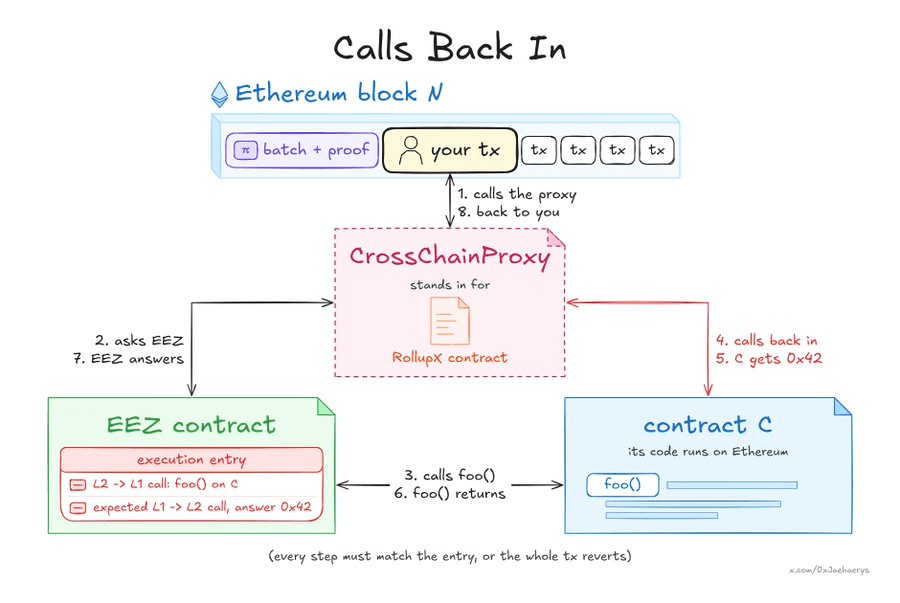
Under the described design, a contract on another chain has a predictable proxy address calculated with CREATE2 from the EEZ contract address, the original contract address and the chain ID. Before a block is built, a composer simulates the transaction across the chains involved. It records each cross-chain call in an execution table: the call’s answer, the rollup state roots before and after the call, any calls back to Ethereum, and a rolling hash of those calls and results.
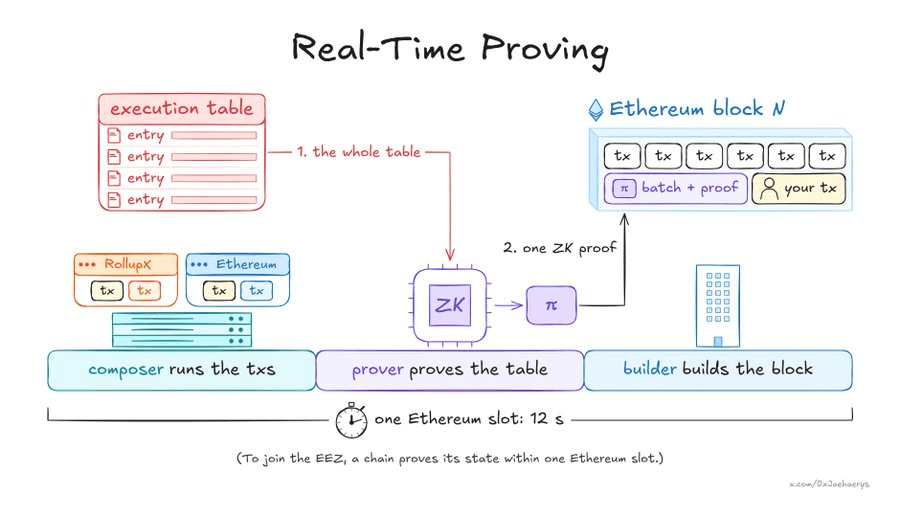
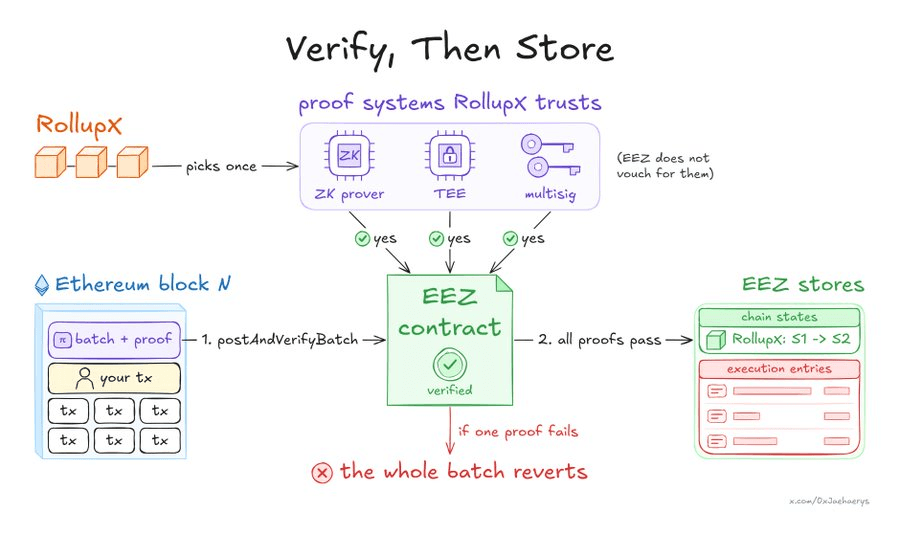
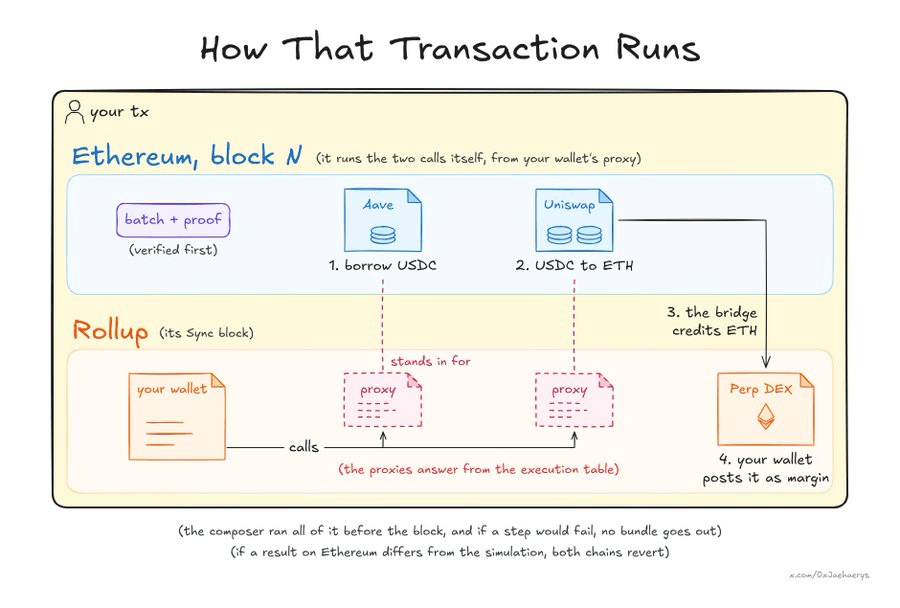
The composer sends a bundle to an Ethereum block builder. Its first transaction, postAndVerifyBatch, submits the table and verifies its proof; later transactions can then call proxies that read the verified answers. According to the article, a proxy answers only when the actual call matches the simulation, its table entry arrived in a batch in the same block, and the callback hash matches. The author says the bundle is withheld if simulation finds a failed step, while a mismatch during execution causes the Ethereum and rollup operations to revert.
This arrangement depends on timing and trust rules, not just an address mapping. A participating chain must prove its state within one Ethereum slot—12 seconds in the article—and roll back when Ethereum reorganizes. The chain’s onboarding rules determine whether a batch relies on ZK proofs, a trusted execution environment, multisignatures or a combination, and how many proofs are required. The article reports that RISC Zero and SP1 can prove a block within 12 seconds using 8–16 GPUs at a cost of 1–5 cents; those are the author’s reported figures, not measurements established here.
Reported uses and limits
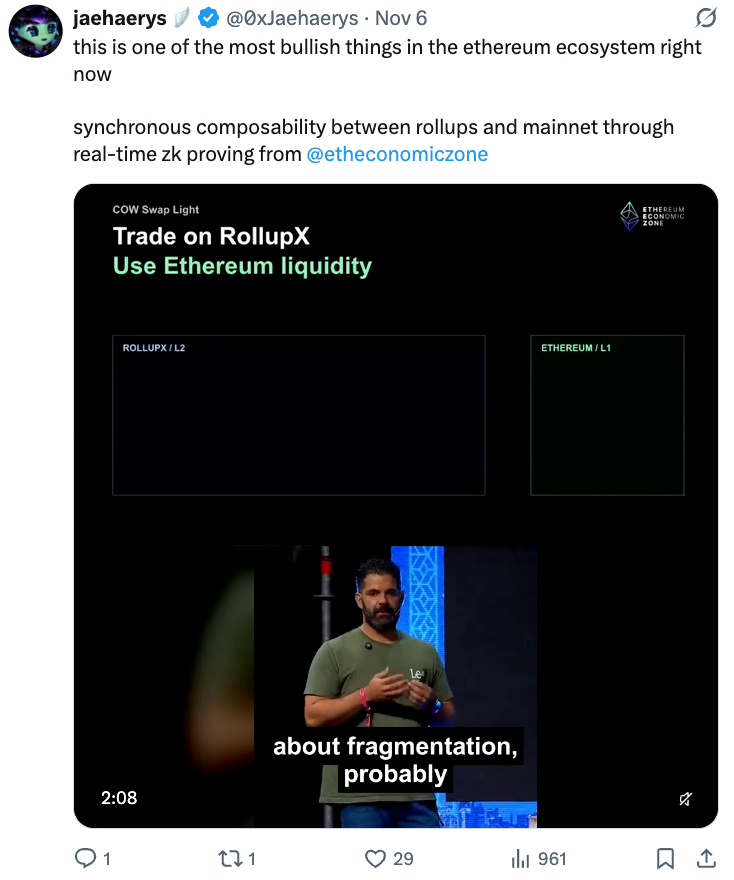
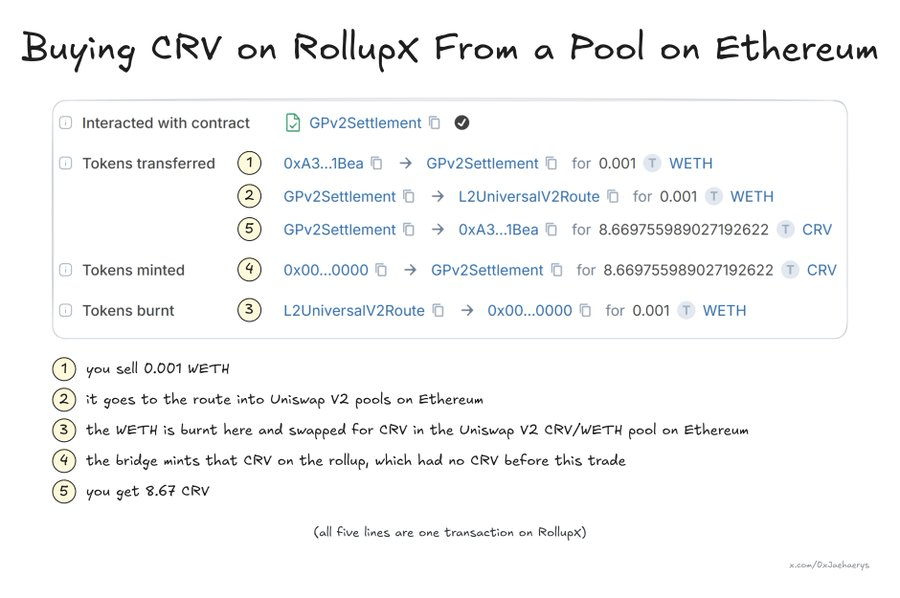
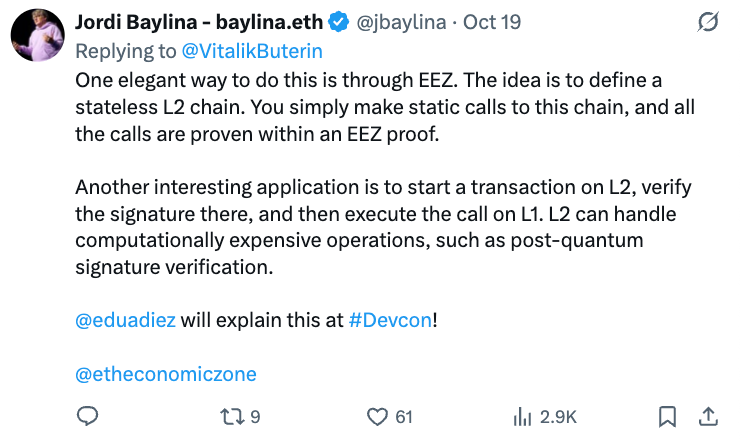
The article describes a RollupX example in which a user bought CRV from an Ethereum Uniswap pool and received wrapped CRV minted during the same swap, despite CRV not previously existing on the rollup. It also describes a Safe setup whose signers and permissions remain in an Ethereum contract, a Bermuda Bay privacy-pool swap involving Uniswap V3, and a demonstration in which rollup verification of a Falcon signature authorized an Ethereum Safe payment. These are reported examples, not evidence that every chain or application can use the design on the same terms.
The constraints matter for interpreting any resulting on-chain record. The author says a fast chain cannot simultaneously have fast blocks, synchronous Ethereum calls and decentralized sequencing. In an example with 200-millisecond blocks, only one in every 60 blocks is synchronous, giving applications access to Ethereum every 12 seconds. The composer must see unencrypted transactions before block construction, giving it and the builder an advantage in capturing MEV. The article also states that validator-built Ethereum blocks—reported as 7% of blocks—do not support these synchronous calls. For EEZ’s first month, it reports that all batches landed in blocks from external MEV-Boost builders and that 56% landed in Titan-built blocks, versus Titan’s usual 48% share.
An execution-table entry is thus a proposed, proof-checked answer to a particular cross-chain call, not evidence that two chains have merged their ledgers. Reading a resulting transaction requires attention to its block, the verified batch, the participating chain’s proof rules and whether the call actually executed.
Source: techflowpost.com (originally published 2026-11-13 14:05 UTC+8)